Drift
Protected by Allstate. Powered by Shared Mobility.
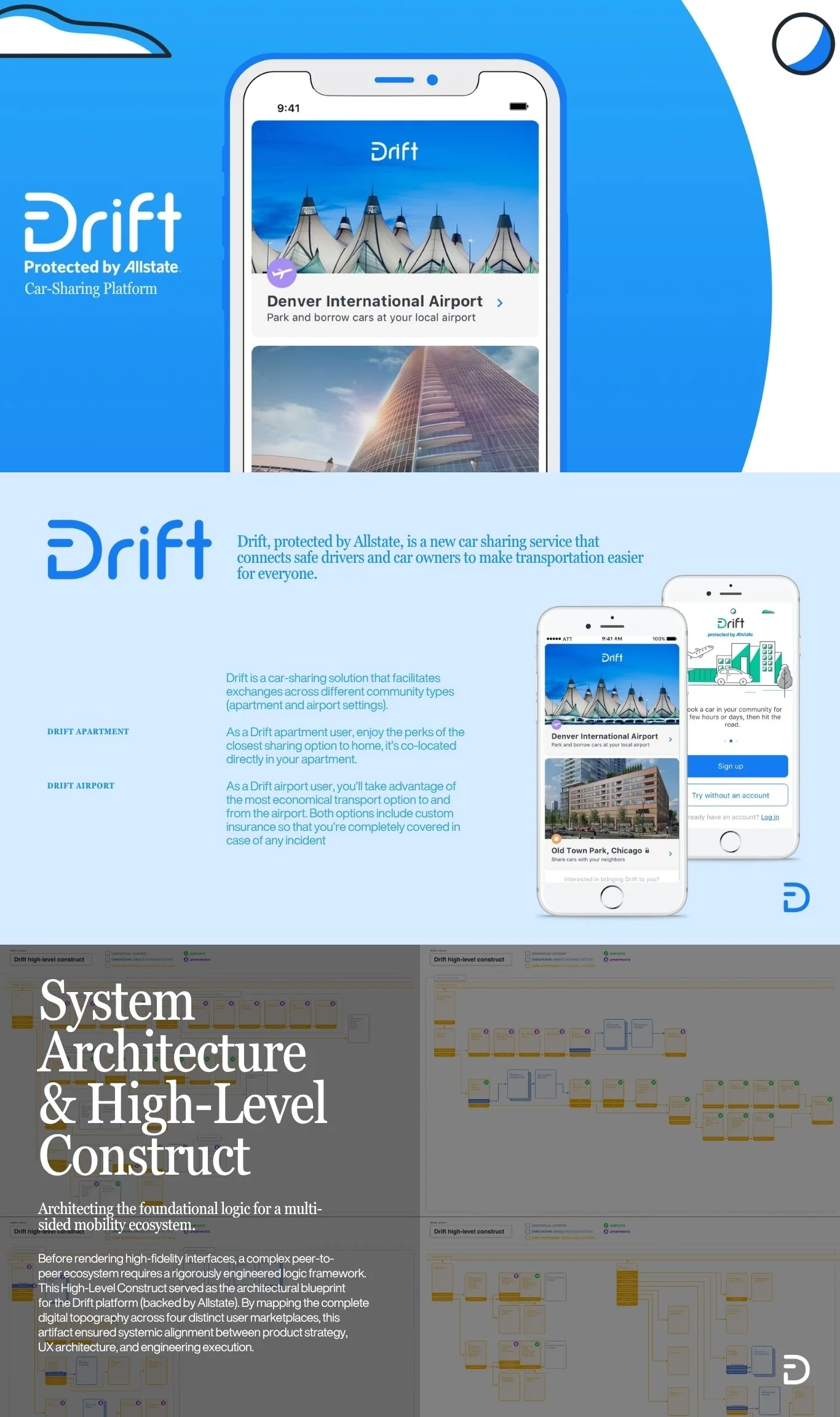
Drift is a peer-to-peer mobility platform designed to redefine how communities access transportation through trusted, decentralized car-sharing experiences.
Backed by Allstate, the platform connects vehicle owners, residential communities, and airport ecosystems into a unified mobility network built around convenience, accessibility, and trust.
Drift transforms underutilized vehicles into community-powered transportation infrastructure while creating a safer, more flexible alternative to traditional rental systems.
Overview
Transportation systems remain inefficient, fragmented, and inaccessible for many modern users.
Traditional rental experiences are expensive, inconvenient, and disconnected from how people actually move throughout cities and residential environments.
At the same time:
vehicles remain unused for most of the day
apartment communities lack localized mobility systems
airports struggle with parking and transportation inefficiencies
users increasingly demand frictionless, app-first experiences
Drift was created to solve this gap through a distributed mobility ecosystem powered by trust, proximity, and intelligent platform design.
The Problem
Modern transportation infrastructure was not designed for flexibility.
Consumers face:
expensive rental costs
parking limitations
transportation friction
low vehicle accessibility
disconnected mobility experiences
Vehicle owners face:
underutilized assets
liability concerns
lack of trust systems
complicated sharing logistics
Communities and property operators lack scalable systems that integrate transportation directly into residential and commercial ecosystems.
The result is a fragmented experience where mobility remains inefficient, expensive, and operationally outdated.
The Vision
Drift envisions a future where mobility becomes:
community-powered
decentralized
trust-based
accessible on demand
seamlessly integrated into everyday environments
The platform transforms transportation from a transactional service into an intelligent ecosystem that connects people, places, and vehicles through proximity-driven experiences.
Product Philosophy
Drift was designed around a simple principle:
Mobility should feel local, effortless, and trusted.
Every layer of the experience was built to reduce friction between:
discovery
booking
verification
access
insurance
and vehicle return
Rather than recreating traditional rental infrastructure, Drift reimagines transportation through behavioral simplicity, scalable trust systems, and ecosystem-level thinking.
Core Experience
Community-Based Car Sharing
Drift enables localized vehicle access within apartment communities and residential ecosystems.
Residents can:
borrow nearby vehicles
access transportation within walking distance
coordinate through trusted environments
avoid expensive rental systems
reduce dependency on vehicle ownership
This creates hyper-local mobility networks embedded directly into everyday living environments.
Airport Mobility Infrastructure
Drift extends mobility beyond residential ecosystems into airport transportation systems.
Users can:
park and monetize their vehicles
rent nearby vehicles upon arrival
reduce transportation downtime
streamline airport mobility logistics
The result is a more flexible alternative to traditional airport rental experiences.
Trust & Insurance Systems
Because mobility requires trust, Drift integrates protection directly into the experience.
Backed by Allstate, the platform incorporates:
insurance integration
identity verification
secure onboarding
behavioral accountability systems
safety-first transaction architecture
This creates a safer peer-to-peer ecosystem for both drivers and vehicle owners.
System Architecture
Drift was architected as a multi-sided mobility ecosystem connecting:
renters
vehicle owners
apartment communities
airports
insurance systems
operational infrastructure
The platform required a scalable logic framework capable of managing:
vehicle availability
geographic proximity
booking systems
insurance workflows
user trust scoring
transaction coordination
marketplace synchronization
The architecture was designed to support both local community exchanges and large-scale transportation ecosystems simultaneously.
UX Strategy
The user experience was intentionally designed to reduce cognitive friction and simplify transportation access into a few intuitive actions.
Key UX priorities included:
effortless onboarding
fast booking flows
transparent trust indicators
location-driven discovery
simplified marketplace interactions
mobile-first accessibility
The goal was to make transportation feel immediate, lightweight, and emotionally frictionless.
Design Principles
Mobility Through Simplicity
Reducing operational complexity into intuitive, user-friendly experiences.
Trust-Centered Interactions
Designing transparency, verification, and safety into every transaction layer.
Localized Ecosystem Thinking
Creating transportation systems embedded within real-world communities.
Scalable Marketplace Infrastructure
Supporting multi-sided platform growth without sacrificing usability.
Frictionless Behavioral Design
Minimizing decision fatigue and accelerating user confidence throughout the journey.
Target Users
Drift was designed for a broad spectrum of modern mobility users, including:
Urban Residents
Individuals seeking flexible transportation without full-time vehicle ownership.
Apartment Communities
Residential ecosystems looking to offer mobility as an integrated amenity.
Travelers & Airport Users
People needing fast, reliable transportation directly connected to airport environments.
Vehicle Owners
Users looking to monetize underutilized vehicles safely and efficiently.
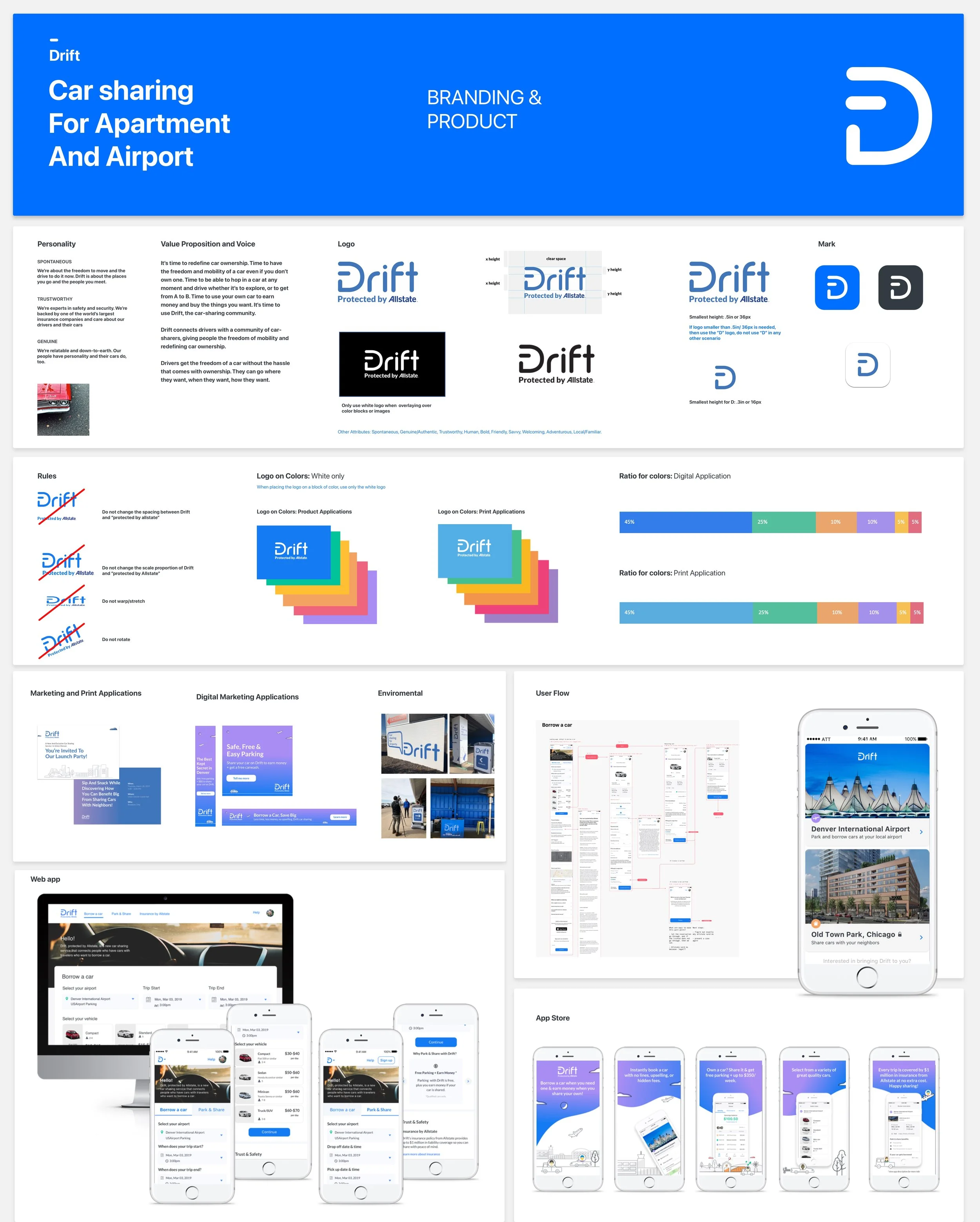
Brand Identity
The Drift identity system was designed to feel:
modern
approachable
trustworthy
lightweight
mobility-driven
The visual language combines clean geometric forms, transportation-inspired iconography, and calming blue-based systems that reinforce accessibility and safety.
The brand balances startup agility with enterprise-level credibility through its partnership positioning with Allstate.
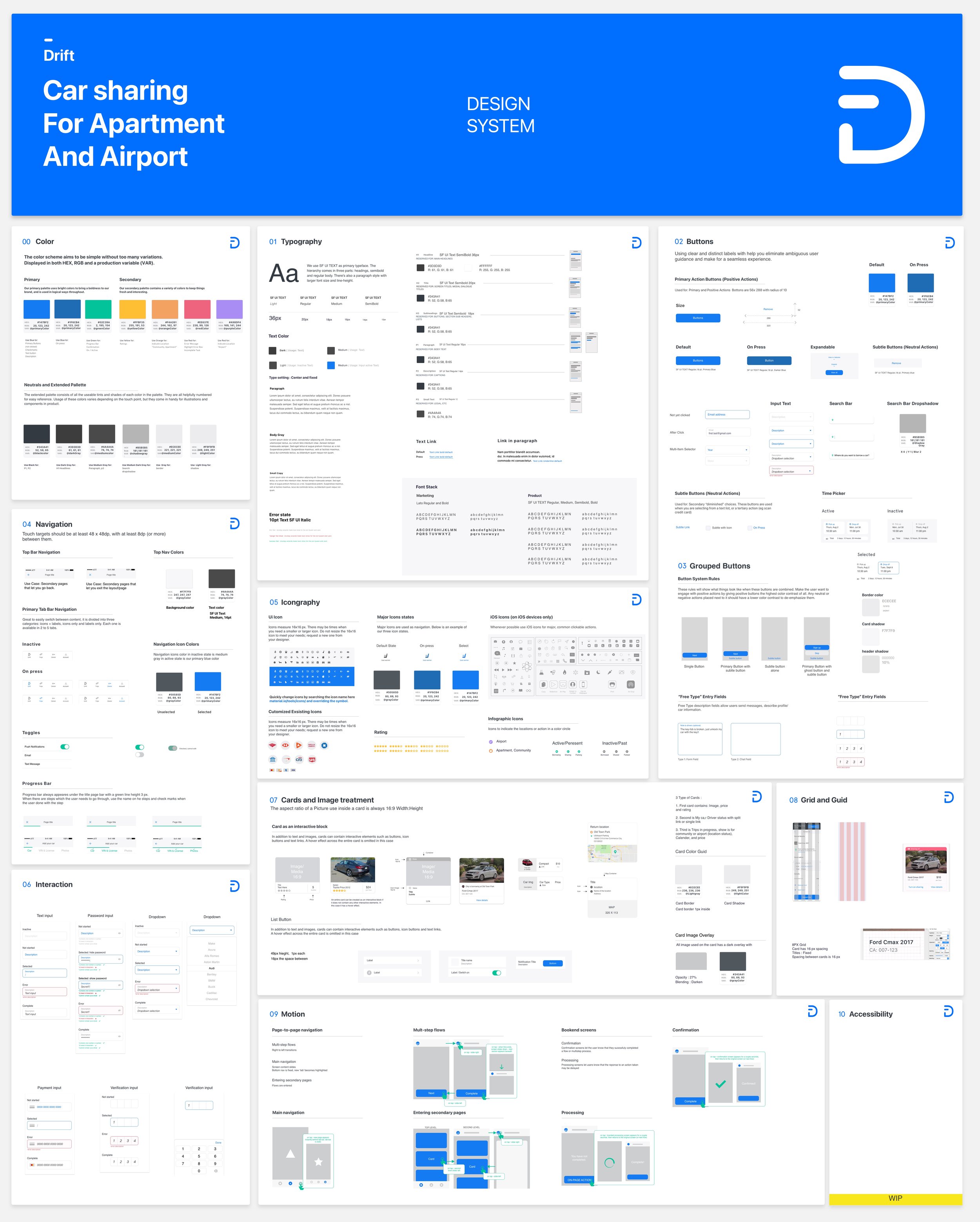
Design System
The Drift design system focused on consistency across:
mobile applications
onboarding systems
booking flows
marketplace interactions
operational dashboards
environmental branding
commercialization assets
The system emphasized:
modular scalability
accessibility
visual clarity
strong hierarchy
motion-guided interactions
This created a cohesive experience across both consumer-facing and operational touchpoints.
Commercialization Strategy
Drift was positioned as both:
a consumer mobility platform
and an infrastructure solution for property ecosystems and transportation partners
The business model created opportunities across:
apartment partnerships
airport ecosystems
mobility subscriptions
transaction fees
insurance integrations
enterprise partnerships
The platform introduced a scalable framework for decentralized transportation networks.
Outcome Vision
Drift represents a broader shift in how mobility infrastructure can evolve in modern cities.
Rather than relying exclusively on centralized transportation systems, Drift introduces a more adaptive, community-powered model built around flexibility, trust, and intelligent coordination.
The future of transportation is not just autonomous.
It is connected, decentralized, and embedded directly into the environments where people already live and move.